

AI and API Security Trends 2026 (H2)
The H2 2026 State of AI and API Security report examines how companies are securing AI and APIs, the challenges they face, and how their API security strategies are evolving in the Agentic AI Era.
Download the reportIn the past 12 months, has an AI agent taken an action that your organization did not intend, expect, or explicitly authorize?
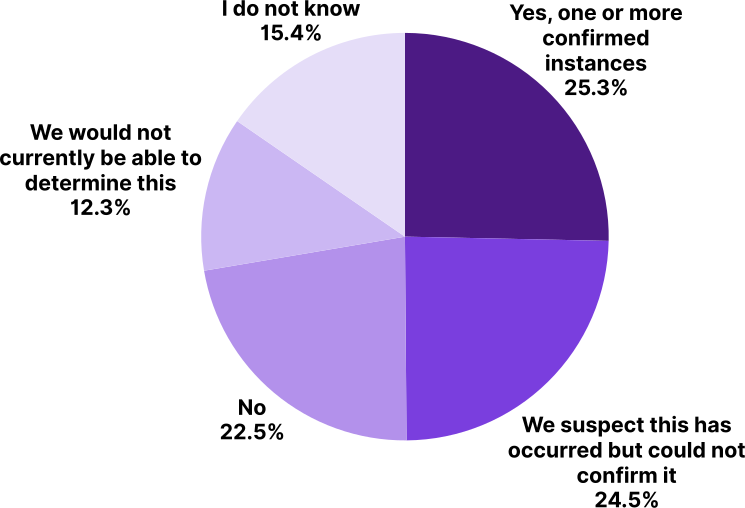
Agents are already doing things no one authorized
49.8% of respondents confirmed or suspected an AI agent took an action in the past year the organization did not intend, expect, or authorize.
Of those, 53.9% involved an external API call or transaction, 41.9% modified or deleted data, and 32.5% reached data the agent should not have had.
If you needed to determine every action a specific AI agent took yesterday, how long would that take?
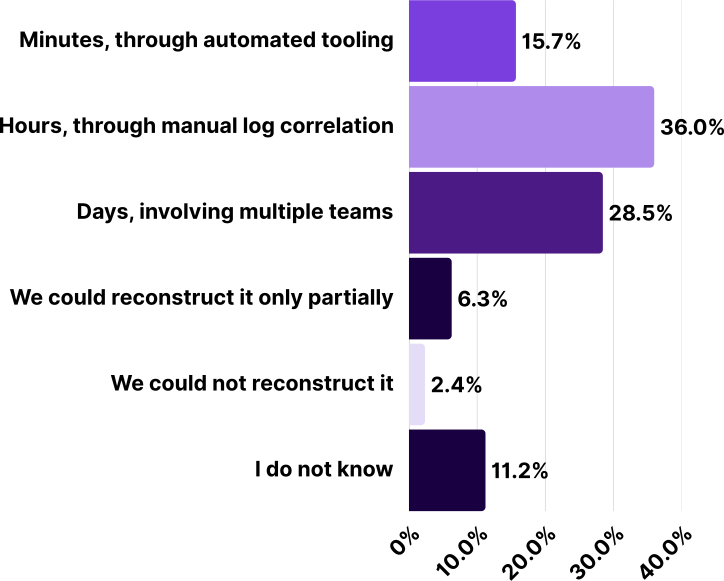
Most organizations can't see what their agents do
Only 12.5% can consistently trace an agent's full path, from instruction through tools and APIs to outcome, across all agents. Only 15.7% could reconstruct everything an agent did yesterday in minutes, while 64.5% would need hours or days of manual work. A mere 17.5% can automatically stop an agent that starts behaving unexpectedly in production. Most can intervene only manually, or by taking the application down.
How do you compare?
Check out our H2 2026 State of AI and API Security Report to find out.
In the past 12 months, has an AI agent taken an action that your organization did not intend, expect, or explicitly authorize?
The connective layer is becoming an attack surface
32.9% have found an unauthorized, shadow or misconfigured MCP server in the past year; 54.3% have found or suspect one.
Salt Labs sees the same trend in the field: MCP-related infrastructure appeared in 21.6% of customer environments in August 2026, up from 16.7% in January.
Agentic-connected API endpoints are already being attacked in roughly a quarter (26.3%) of the environments where Salt Labs studied them, an early but directional signal.
What percentage of your application security findings do you estimate originate from AI-generated or AI-assisted code?
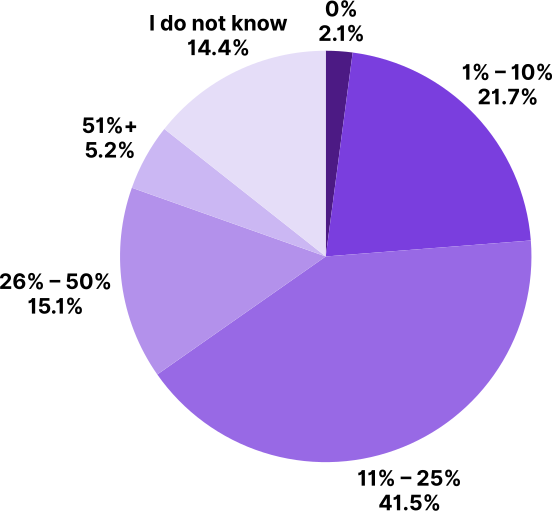
AI-generated code is now a live security problem
83.5% estimate AI-generated or AI-assisted code accounts for at least some of their application security findings. Yet only 22.2% enforce security and compliance policy across all approved AI coding assistants, and just 6.8% resolve issues in the assistant at generation time.
Attack attempts leveraging the OWASP API Security Top 10 vs. other attack types.

Attackers are Following the OWASP Top 10. Are you?
The OWASP API Security Top 10 is a crucial resource for professionals working in API security, and it highlights the most common and high-risk vulnerabilities that attackers exploit.
A large percentage of API attacks target these well-known weaknesses. 77.1% of attack attempts leverage one of more of OWASP API Top 10 methods.
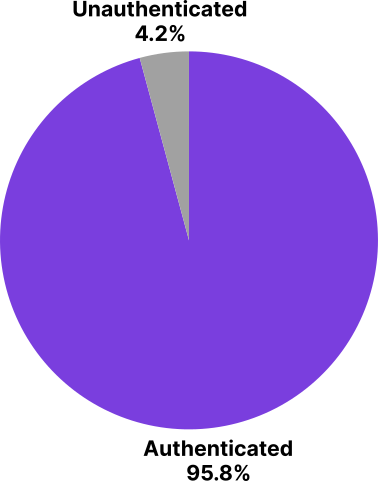
Attack attempts from authenticated vs. unauthenticated attackers
A quick look into attack attempts, as analyzed by Salt Labs
95.8% of attack attempts analyzed by Salt Labs originate from authenticated sources, increasingly rogue agents operating with legitimate credentials but no human oversight, no rate limiting, and no behavioral guardrails.
Download the full report now
Get an in-depth analysis on the concerns, risks, and trends around AI & API security.